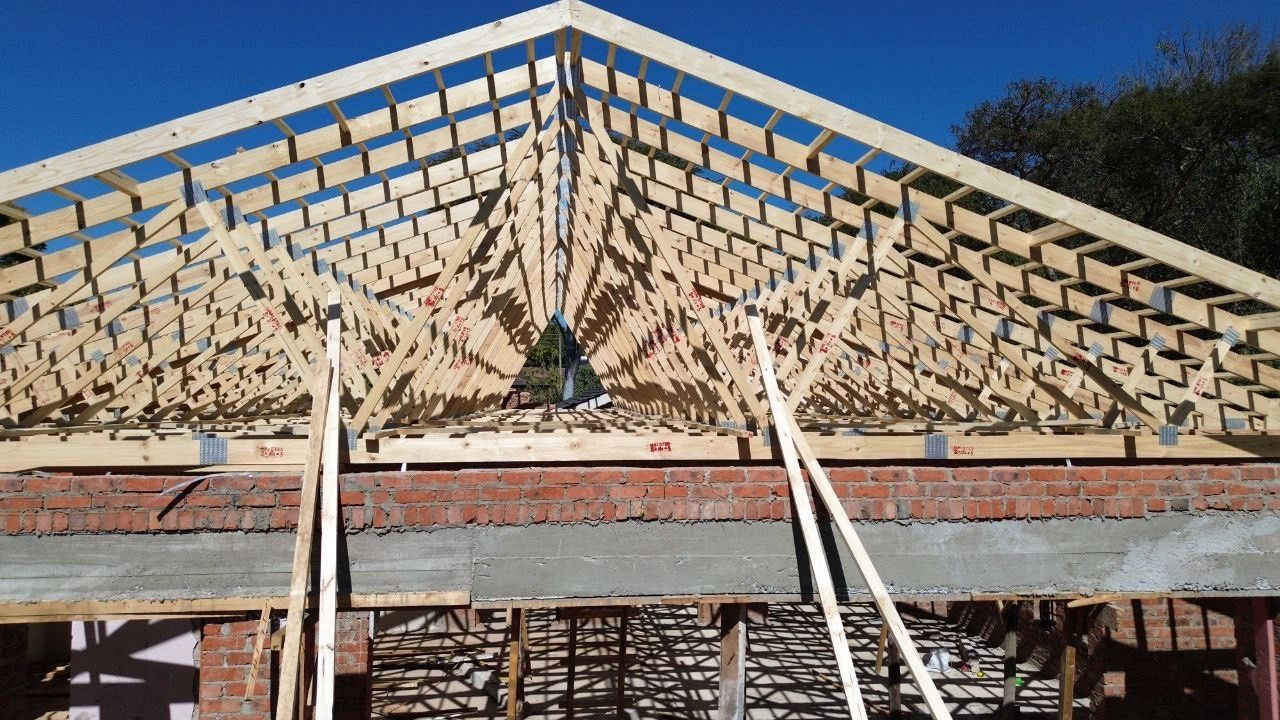
Prefabricated trusses offer several benefits when used in housing construction. These pre-engineered structural components have become increasingly popular in residential construction in Zimbabwe due to their efficiency, cost-effectiveness, warranty of quality and versatility. Here are some of the key benefits of using prefabricated trusses in housing:
- Speed of Construction: Prefabricated trusses are manufactured off-site in controlled conditions, which allows for precise engineering and faster production. This speeds up the construction process significantly compared to traditional stick-built roof framing. As a result, your housing project can be completed more quickly, saving both time and money.
- Consistency and Precision: Prefabricated trusses are designed and manufactured to exact specifications, ensuring consistency and precision in the construction process. This minimizes errors and reduces the need for on-site adjustments, resulting in a higher-quality final product.
- Cost-Effective: While the initial cost of prefabricated trusses may be slightly higher than traditional framing methods, the overall cost savings can be substantial. Reduced labour costs, shorter construction timelines, and minimal material waste contribute to cost-effectiveness over the long term.
- Structural Integrity: Prefabricated trusses are engineered to meet or exceed building code requirements and industry standards. They are designed to provide excellent structural integrity, ensuring that your home’s roof can withstand various weather conditions and loads.
- Versatility: Prefabricated trusses are versatile and can accommodate a wide range of architectural styles and roof shapes. Whether you need a simple gable roof or a more complex hip or mansard roof, prefabricated trusses can be customized to fit your specific design requirements.
- Reduced Material Waste: Because prefabricated trusses are engineered and manufactured with precision, there is minimal material waste compared to traditional framing methods. This can be environmentally friendly and also contribute to cost savings.
- Conservation of Resources: Prefabricated trusses are often made from sustainably sourced wood or engineered wood products. Using these materials efficiently can help reduce the overall environmental impact of your construction project.
- Quality Control: The manufacturing process for prefabricated trusses allows for rigorous quality control. Each truss can be inspected and tested before it leaves the factory, ensuring that it meets the necessary standards and specifications.
- Safety: Prefabricated trusses are designed with safety in mind. They are engineered to provide stability and strength, reducing the risk of structural failures during and after construction.
- Design Flexibility: Despite being prefabricated, trusses can be customized to accommodate various design elements, such as vaulted ceilings, attic spaces, and skylights, allowing for greater design flexibility in your housing project.
In summary, prefabricated trusses offer a range of benefits in housing construction, including speed, cost-effectiveness, precision, and structural integrity. They can be a valuable choice for homeowners and builders looking to streamline the construction process while ensuring a high-quality and efficient roofing system.