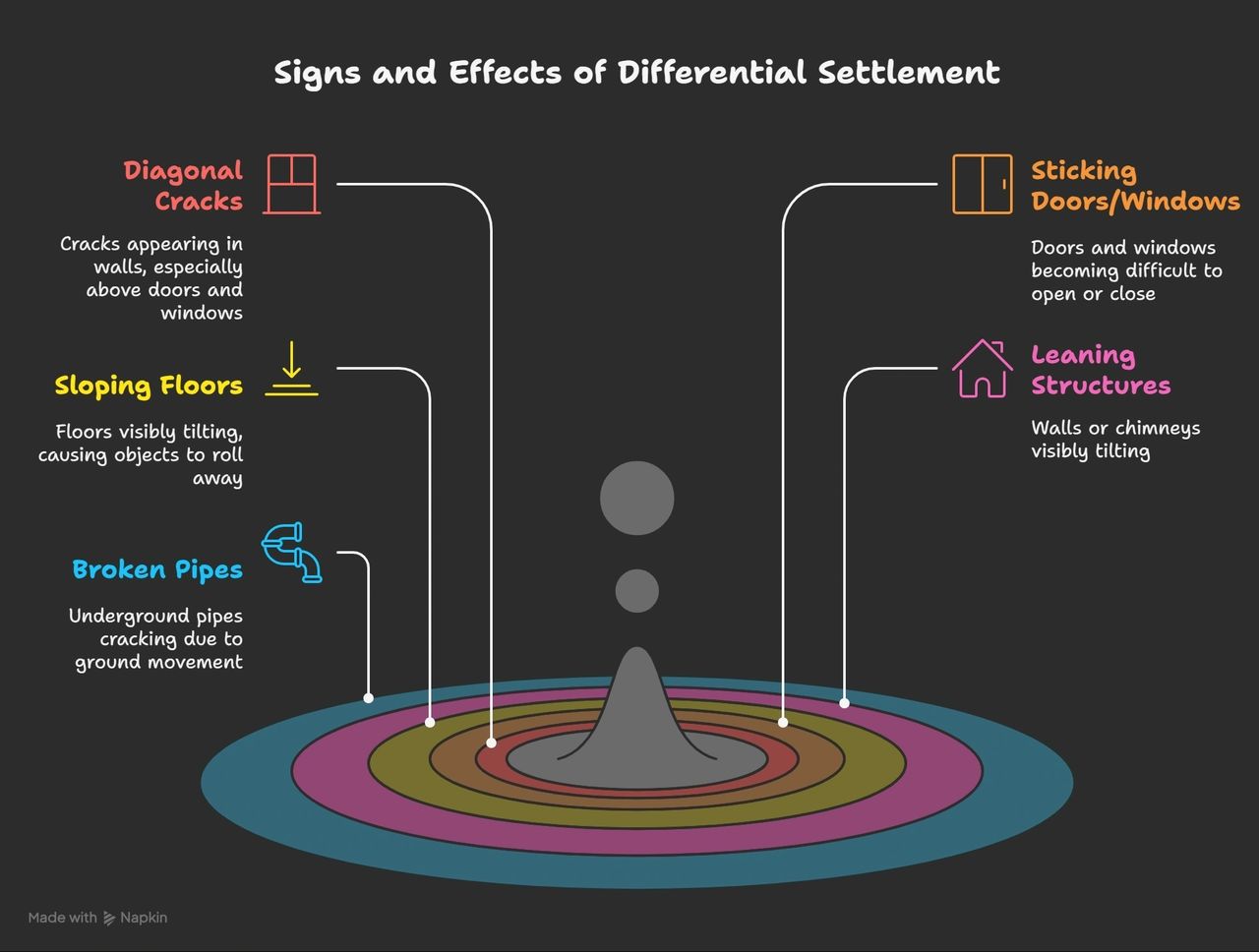
Picture this: you’ve just built your dream home in Borrowdale, a solid new warehouse in Msasa, or a school in rural Gokwe. Everything looks perfect — until, months later, cracks creep along the walls, doors won’t close properly, and parts of the building seem to be sinking. What went wrong? One of the most silent yet destructive forces in construction is differential settlement — a hidden enemy that can compromise the safety and lifespan of any structure if not properly addressed.
At Engineerium Projects, we’ve seen firsthand how differential settlement can be a manageable challenge or a costly disaster, depending on how it’s handled. Here’s what every property developer, homeowner, and contractor in Zimbabwe needs to know.
What is Differential Settlement?
Settlement is the natural movement of a building as it sinks slightly into the ground under its own weight. It happens everywhere — even in Harare’s leafy suburbs or the sandy soils of Bulawayo.
Differential settlement, however, is the uneven sinking of a structure. One corner might drop more than the other, or one side might settle faster. This uneven movement strains the building, causing cracks, tilting, and in extreme cases, serious structural failure. While some settlement is inevitable, differential settlement is the type we want to avoid, and where careful planning pays dividends.


Why Does Differential Settlement Happen?
In the Zimbabwean landscape, several factors come into play:
- Mixed Soil Profiles: Areas like Mt Pleasant and Glen View can have pockets of clay sitting beside sandy soils. These soils behave very differently when loaded, causing uneven movement.
- Moisture Variations: In many parts of Zimbabwe, the rainy season brings flooding, while the dry season brings intense shrinkage. Clay soils swell when wet and shrink when dry, creating instability beneath structures.
- Poorly Prepared Ground: In fast-growing urban areas, we sometimes see houses built on improperly compacted fill, old rubble or loose soil that settles long after the building is completed.
- Trees and Vegetation: Large msasa or gum trees near a building can draw moisture unevenly from the soil, contributing to settlement.
- Uneven Building Loads: Heavy structures like water tanks, double-storey wings, or concrete decks can overload parts of a foundation if not designed and distributed correctly.
How to Minimise Differential Settlement Before Building
Preventing differential settlement starts long before the first brick is laid. At Engineerium Projects, we follow proven steps to ensure your building stands the test of time:
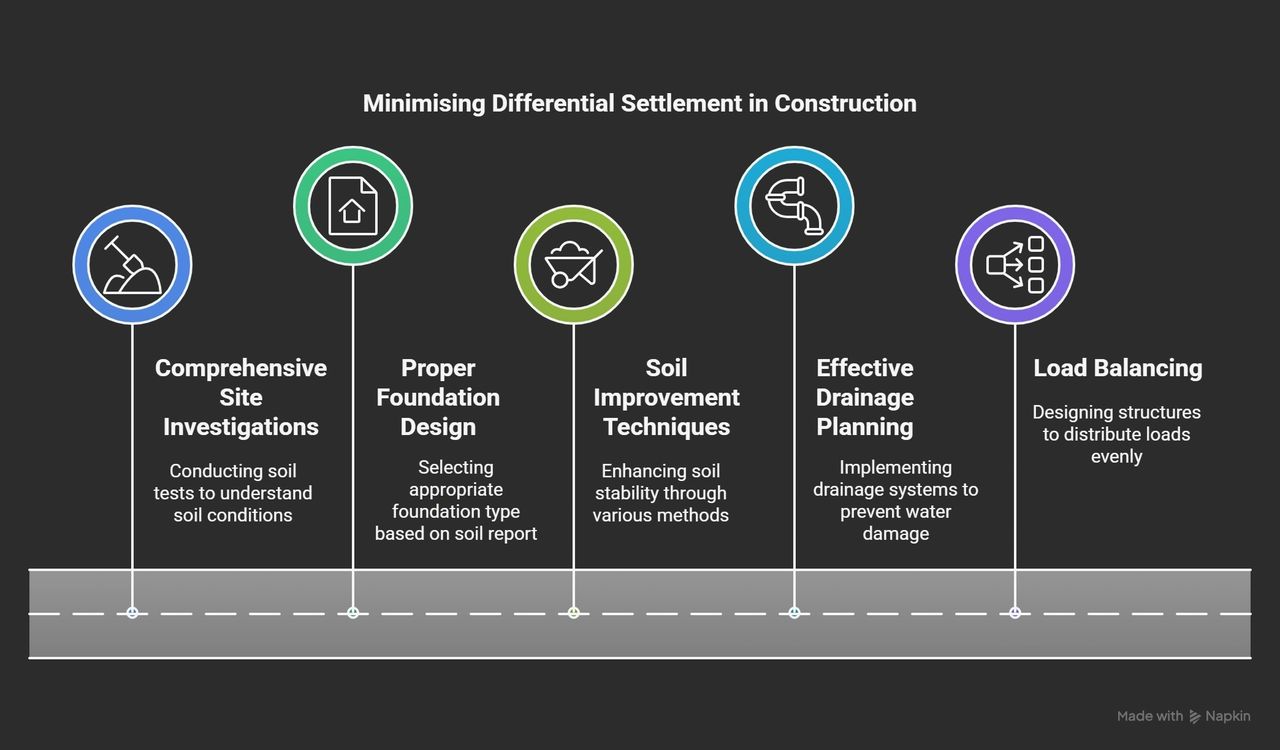
- Comprehensive Site Investigations: A few soil tests can reveal a lot. We perform Dynamic Cone Penetration Tests (DCPs), or even simple trial pits, to understand what’s beneath your project.
- Proper Foundation Design: Depending on the soil report, we may recommend:
Strip foundations for stable soils.
Raft foundations are used where uniform support is needed over weaker soils.
Pile foundations if deeper, more stable strata are necessary. - Soil Improvement Techniques: Where needed, we compact soils thoroughly, replace poor materials, or stabilise using methods like lime treatment.
- Effective Drainage Planning: A good drainage system prevents water from pooling and undermining your foundations, especially critical in areas prone to seasonal flooding.
- Load Balancing: Our engineers design structures to distribute loads evenly, reducing stress concentrations.
Can Differential Settlement Be Fixed After It Happens?
Yes, but the earlier the intervention, the better (and cheaper!). Here’s how:
- Underpinning Foundations: Strengthening foundations by digging beneath them and adding new concrete or piles to reach firmer soils.
- Slabjacking or Mudjacking: For sunken concrete floors, injecting special grouts to lift them back into place.
- Installing Helical Piers: Screw-like steel piers are drilled deep into stable ground to support and relevel the structure.
- Soil Stabilisation: Injecting resins or grouts to fill voids and densify soils beneath foundations.
- Improving Drainage and Landscaping: Redirecting water away from structures to prevent further soil movement.
At Engineerium Projects, we offer assessment and remedial services tailored for Zimbabwean soils and building types.
The Bottom Line
In construction, what you don’t see can hurt you. Differential settlement is one of those hidden dangers, often striking months or years after a project finishes. But with the right expertise and careful planning, it’s entirely possible to prevent or manage.
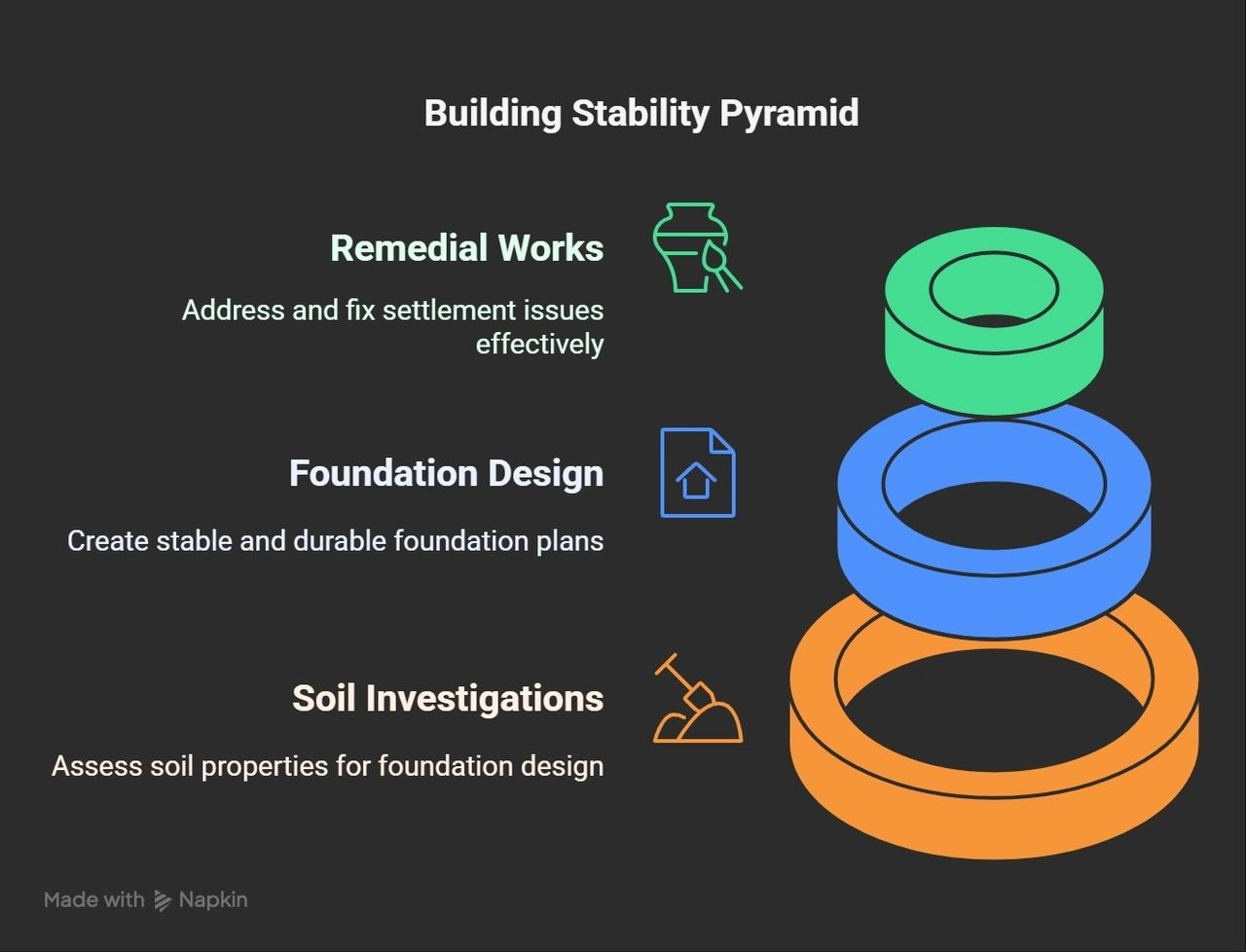
If you’re planning a new project or noticing worrying signs in an existing building, Engineerium Projects is ready to assist, from soil investigations to foundation design and remedial works.
Solid ground. Solid advice. Solid results. That’s our promise.